
STALKING: FORENSIC PSYCHOLOGY PERSPECTIVE
When No Is HeardWhat the public should know about stalking, cyberstalking, harassment, and threats outside of romantic relationships.
For some, hearing the word “no” means that it is time to start calling. It is time to start watching. It is time to keep posting. Stalking involves a repetitive process. The pattern need not involve a relationship, a friendship, or even a connection through geography. A total stranger, who may live states apart from their victim, can become obsessed with another individual whom they have never met. This obsession may begin with a single message and gradually become a terrifying campaign.This article is written with the clarity of a survivor and without the fear of one. I am a child sex trafficking survivor as well. When I was 16½, I escaped and wrote my book years later expressing a portion of my experiences. It is clear what the intent is. Readers will learn the definition of stalking, who the stalkers are, what the victims pay for, and what works to stop the stalker. Finally, I would like the readers to be aware of the psychological/physical and spiritual impact of being vulnerable at the mercy of predators and being re-victimized. The emphasis will be on stalking other than within the context of relationships and domestic violence. This is in context. However, there are a lot of people out there who are victims of stalkers who are their friends, coworkers, online acquaintances, or strangers.
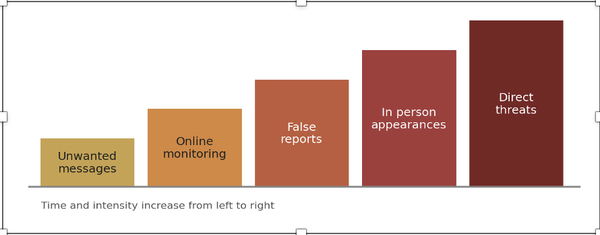
Figure 1. An illustration of how stalking behaviors can grow in range and intensity over time.
What Stalking Really Is
According to researchers, stalking is an unwanted behavior done repeatedly, which make the individual feel fear or distress (Weekes et al., 2025). However, cyberstalking is similar to stalking, with the only difference being its occurrence online. The tool used may be different. The harm caused remains the same. Mostly, the two types of stalking overlap. One may stalk the other at an event before moving online and sending him or her messages the following week (Weekes et al., 2025).
Threatening and harassment are included in the category of stalking. Harassment may involve unwanted contact, insults, or baseless claims intended to tarnish someone's reputation. Threatening involves actions and words used with the intention of intimidating. As stated by Weekes et al. (2025), the most common methods include repetitive emails, text messages, and online social networking messages. Others may involve hacking the person's social media accounts, using GPS to track the individual, pretending to be the other individual online, and communicating with the individual's friends and relatives. While these acts might seem unimportant individually, together they form a pattern of behavior. That is what needs to be established.
Definitions play an important role in deciding who receives treatment. According to Weekes et al. (2025), when reviewing studies on cyberstalking definitions, there is significant variance in terms of the number of incidents involved. Not even the majority have considered the feeling of fear in the victim. This is not just theoretical since police, victims, and courts can have different standards when deciding what should qualify. Someone who feels that they are being watched may question the seriousness of such behavior. The scientific definition leaves nothing in doubt.

Figure 2. Constant digital access gives a determined person many ways to make contact. Stock photograph used for illustration only.
Who Stalks and Why
There is no one particular profile for every stalker. Patterns can be found, however. Weekes et al. (2025) reviewed 80 studies of cyberstalking perpetrators. They found that perpetrators also lack social skills, have a weak sense of self-control, and have attitudes that accept stalking. Most were victims of physical abuse. Moreover, predictors of stalking were impulsivity and impaired emotional control. Their intimate reasons were to mend a relationship, to get back at someone, for a relationship, or to exert control over the victim.
Personality is also important. Truss and de Roos (2024) examined 100 countries vulnerable to stalking that were accessed via a national stalking helpline. The personality traits that the victims felt their stalker was exhibiting. He was the first to list narcissistic traits and then antisocial traits. Cluster B personality types had frequent occurrence. Cluster B refers to a pattern characterized by exaggerated emotions, impulsivity, and a lack of empathy. The authors also concluded that there was an association between obsessions-compulsions and the intent to scare the victim. More serious stalking was associated with the description of Cluster B traits, as well as paranoid, schizotypal, and obsessive-compulsive traits (Truss & de Roos, 2024). These ratings were obtained by asking victims and not by clinical examination. They demonstrate perception and not diagnosis.
People in the public generally use the term malignant narcissist. This is not a proper diagnosis. Consultants use the concept to explain narcissism in conjunction with aggression, no remorse, and a desire to dominate. There is evidence, however, that these narcissistic characteristics link to stalking. Similarly, Weekes et al. (2025) found a relationship between cyberstalking and narcissism, sadism, and Machiavellianism. Results on psychopathy were somewhat inconsistent.
The feeling of rejection is a theme that runs through all of them. Receiving a No might be perceived as an attack on their representation by a person who cannot accept the No. The person then strives to recover. Therefore, the unambiguous rejection can lead to even more pursuing, not less.
Researchers also categorize the perpetrators according to motive. One typology outlined by Weekes et al. (2025) provides a classification of five types. Rejected perpetrators try to win back the victim or to test the victim's patience. Humiliated perpetrators feel resentful and seek revenge. The perpetrators who are intimacy-seeking construct a fantasy of love, typically with a stranger or acquaintance. Incompetent suitors think that they have a right to a relationship and do not know how to begin it. Predatory Perpetrators stalk and prepare for attack. Resentful and intimacy-seeking types are the most significant types in regard to people who are targets of harassment outside the context of a relationship. Fascination with an unfamiliar person may fall into the fantasy pattern. Even a little bit of grumpiness over something perceived as an insult can fall into the resentful pattern. Both can be long-lasting.
The Question of Spiritual Evil
Some victims use spiritual terms to describe stalkers. When behavior is unremitting and brutal, words such as evil or possessed seem very appropriate. Those words convey the fear. I know why. I was a survivor of child sex trafficking, and the victimization wounds not only the mind and body, but the spirit as well. There is a lot of strength in a lot of people's faith during tough times. In the field of forensic psychology, however, there is no evidence to suggest demonic possession as an explanation. The research categorizes the attributes, reasons, and learned actions. Believing in faith can help the person who is hurt. No, faith should not replace safety planning, the legal system, or seeking professional assistance.
How Threats Grow
Potential dangers are not something to be taken lightly. The research presented by Weekes et al. (2025) indicates that covert monitoring, including GPS tracking and account access, was linked to greater fear and also greater impairment of daily life. Scammers also have anonymous accounts. As for a platform that removes one account, new accounts can be easily created. There are a few effective measures available to prevent this (Weekes et al., 2025).
The threat can be either explicit or implicit. A direct threat has a name attached to it. A hidden threat tells the victim the source of the person's knowledge of the victim's lifestyle, work, or travel schedule. Both seek to control. If they come to events, or recap private information, or send messages on behalf of others, it indicates escalation. Any pattern that gets more common or stronger is regarded as a warning sign by professionals.
Technology widens the reach. Some of these services have been documented by Weekes et al. (2025), such as anonymous text services, location-sharing apps, and smart home devices that broadcast daily routines. The victim is impersonated online by some of the perpetrators. Others call the victim's friends and family. Someone can still be addressed anytime, anywhere. That is one of the reasons why it is easy to see how a stalker who lives hundreds of miles away can still keep the person he is stalking on his toes at all times. Only the body is insulated by distance. The mind does not get saved because of distance.
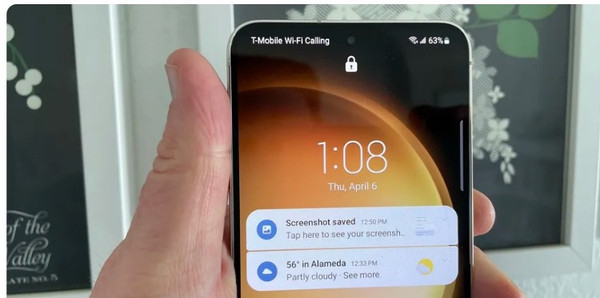
Figure 3. Notifications and location details can reach a person at any hour. Image credit: Tom's Guide.
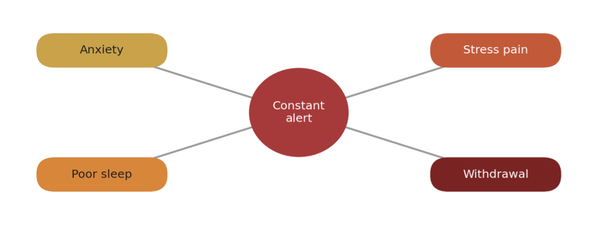
Figure 4. An illustration of the psychological and physical effects that can follow long-term stalking.
The Toll on the Victim
The victim suffers greatly. A review, summarized by Weekes et al. (2025), demonstrates that the symptoms of cyberstalking victimization include anxiety, depression, helplessness, sleep disturbances, and poorer physical health and social withdrawal. Victims may change their careers, withdraw from the education system, and even take social media breaks. The effects can include anxiety attacks, stress headaches, and significant tiredness. The body is on alert as it has not perceived relief from the threat.
As a result of this pressure, daily life is minimized. The victim might not visit or be aware of some places or might stop putting material on the internet. Some leave school, or some drop out of a job, as per Weekes et al. (2025). All the turns are subtle, but the sum of all the turns is a smaller life. Friends might not understand why someone is being withdrawn or shy. Then the fear increases because of the isolation. Survivors are able to name, mourn, and then construct intentionally.
Contrary to common belief, strength and fear can co-exist. I am a living testimony of that. Do not be afraid to seek help; it is a sign of strength and not of weakness.
The losses are not only emotional. Sometimes stalkers have systems in place against the targets they are stalking. Time, money, and reputation can be lost due to false reports and false claims. Defended, however, victims must then fend for themselves in their state of fear. A strong man can feel small from this pressure. The feeling was due to the abuse. Emotions simply do not diminish within the victim.
Why Reporting Is So Hard
Fissel (2023) surveyed 376 young adults who were cyberstalked or cyberbullied within the last year. Approximately 86 percent reported that the incident happened to them, and neither they nor their company reported it to the police. Many victims questioned whether or not the act was a crime or whether police officers could or would intervene. A summary of research by Weekes et al. (2025) indicates that many victims do not even describe their experience as stalking.
Fissel (2023) also found a gender specific difference in one reason for not reporting. The finding concludes that there is no similar barrier for each one of them. Some of the gaps can be addressed by training. Intervention can begin sooner if officers can learn to view stalking behavior as a pattern of behavior and not just a single incident. The victim can help by having a timeline. With such a timeline, the randomness manifests in a line-of-sight pattern, and one may not just overlook it.
If a victim does report, there may be challenges. Weakes et al. (2025) mentioned that police officers are not always able to recognize cyberstalking and thus do not file charges or safeguard victims. Police advise victims to alter their path or to warn off the perpetrator, as stated by Truss and de Roos (2024). Defending against this type of fraud requires a degree of vigilance and heightened awareness. This type of advice sometimes is of no value and can likewise extend the duration of stalking by an obsessed and fixated individual. Things take time to happen. The factors include that the system can only respond to the victim following several reports, written requests, and court filings.
How to Stop It
There is no magic solution for the issue. A layered response seems to be most effective. Legal protective orders, supervision requirements, and victim safety plans are effective tools for addressing stalking cases, Weeks et al. (2025) indicate. The steps below follow that direction.
1. Name the behavior. Call it stalking. Giving names to patterns simplifies their reporting and their explanation.
After the first refusal, they go mum. State (one clear refusal) if necessary. Once you have done that, do not respond. Additional responses may provide nourishment for the chase.
3. Document everything. Record screen goes, dates, timings, and webpage areas. The importance of detailed record-keeping by victims is emphasized by Weekes et al. (2025).
4. Report in writing. Report the incidents to the police and keep the police incident numbers. Send a cease-and-desist letter, and a restraining order if necessary.
5. Secure devices and accounts. Change passwords, change location settings, and delete unknown applications. Stalker apps, GPS trackers, and spyware are recognized as an actual type of research tool (Weekes et al., 2025).
6. Build support. Tell trusted people. Seek out help from a trauma-trained counselor. This is because planning is more effective when done as a team.
7. Come back to court if orders are violated. Violation is a new offense. Every filing adds to the record, which results in an arrest and charges.
Spend additional time collecting your evidence. Weekes et al. (2025) believe it is important for police and victim support organizations and tech companies to collaborate. They are looking to be alert to any red flags, uncover perpetrators' explanations, and enhance the safety of victims. Those victims can help by preserving all the messages, all the names of the profiles, and all the dates. Even blocked accounts need to be written down before they are deleted. A full record facilitates investigators linking fresh to old accounts. The same record assists a judge in seeing the entire pattern of behavior.
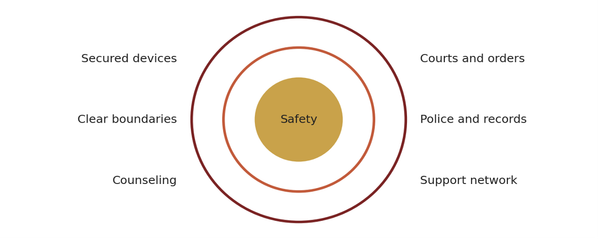
Figure 5. An illustration of layered protection. Legal, digital, and personal supports work together.
What the Public Can Do
Friends, family, and officials have an impact on victim outcomes that exceeds the victims' awareness. Never encourage people to ignore or to block out. Those sayings make a deadly sin a nuisance. Believe the person. Inquire about assistance. Be prepared to be with them while they are reporting. Weekes et al. (2025) also recommend policy applications that hold platforms to account and require technology companies' cooperation with investigations. That change can be facilitated through public pressure.
Conclusion
A stalker can show symptoms of: Entitlement, Emotional problems, and Control problems. These result in anxiety, fear, and panic. However, there are some steps that victims can take to assist them. A nightmare situation can be documented in such a way that one can have clear documentation, legal action, and legal assistance. Through the support of communities, this can happen by seriously addressing the report from the outset. No means no. All safety systems must act in this manner, which protects people.
The message to the readers is practical. Follow the gut instinct and go with that feeling. As soon as possible, and continue to do so. The systems have an equally unambiguous message: See the first mention as a beginning and not the end of a story.
The message to the readers is practical. Follow the gut instinct and go with that feeling. As soon as possible, and continue to do so. The systems have an equally unambiguous message: See the first mention as a beginning and not the end of a story.
References
Fissel, E. R. (2023). Is it a crime? Cyberstalking victims’ reasons for not reporting to law enforcement. Social Sciences, 12(12), Article 659. https://doi.org/10.3390/socsci12120659 Free PDF or full text: https://www.mdpi.com/2076-0760/12/12/659/pdfTruss, L., & de Roos, M. S. (2024). Personality attributions in the context of stalking of ex-intimates or others: A victim’s perspective. International Journal of Offender Therapy and Comparative Criminology, 68, 566–586. https://doi.org/10.1177/0306624X241240703 Free PDF or full text: https://pmc.ncbi.nlm.nih.gov/articles/PMC10988992/
Weekes, C. J., Story, J. E., & Pina, A. (2025). Cyberstalking perpetrators and their methods: A systematic literature review. Trauma, Violence, & Abuse, 27(3), 1009–1025. https://doi.org/10.1177/15248380251333411 Free PDF or full text: https://pmc.ncbi.nlm.nih.gov/articles/PMC13287456/pdf/10.1177_15248380251333411.pdf


